
For all Mankind
Artemis III is deja vu all over again

Here’s a bit of a controversial take: I don’t really care about astronauts.
I mean, what they do is impressive. And for some, very exciting. But it’s very niche. And still a novelty, far off from daily reality for the vast majority of us.
There’s a lot of attention on the SpaceX IPO this week. I will be writing about it next week, once the dust has settled just a little. Meanwhile, I wanted to comment on something that might have gone under the radar a bit….Artemis III
Even looking to the future, I’m not at all focused on humans becoming an off-world species. I’m much more concerned about our terrestrial dependencies on space and satellites, and the geopolitics of what’s going on just above Earth’s atmosphere. I’m much more passionate about raising awareness of our use of space, our impact on space, the need to protect space, than I am about humans floating around in micro gravity, whether professional or tourist.
And yet, astronauts remain emblematic of so much. We can learn a lot by looking at who gets selected into these competitive, elite roles, which are defined as “envoys of mankind” in international space law. And we can learn even more by looking at who is excluded.
This week, the Artemis III crew was announced, and surprise, surprise: it’s an all-male crew.
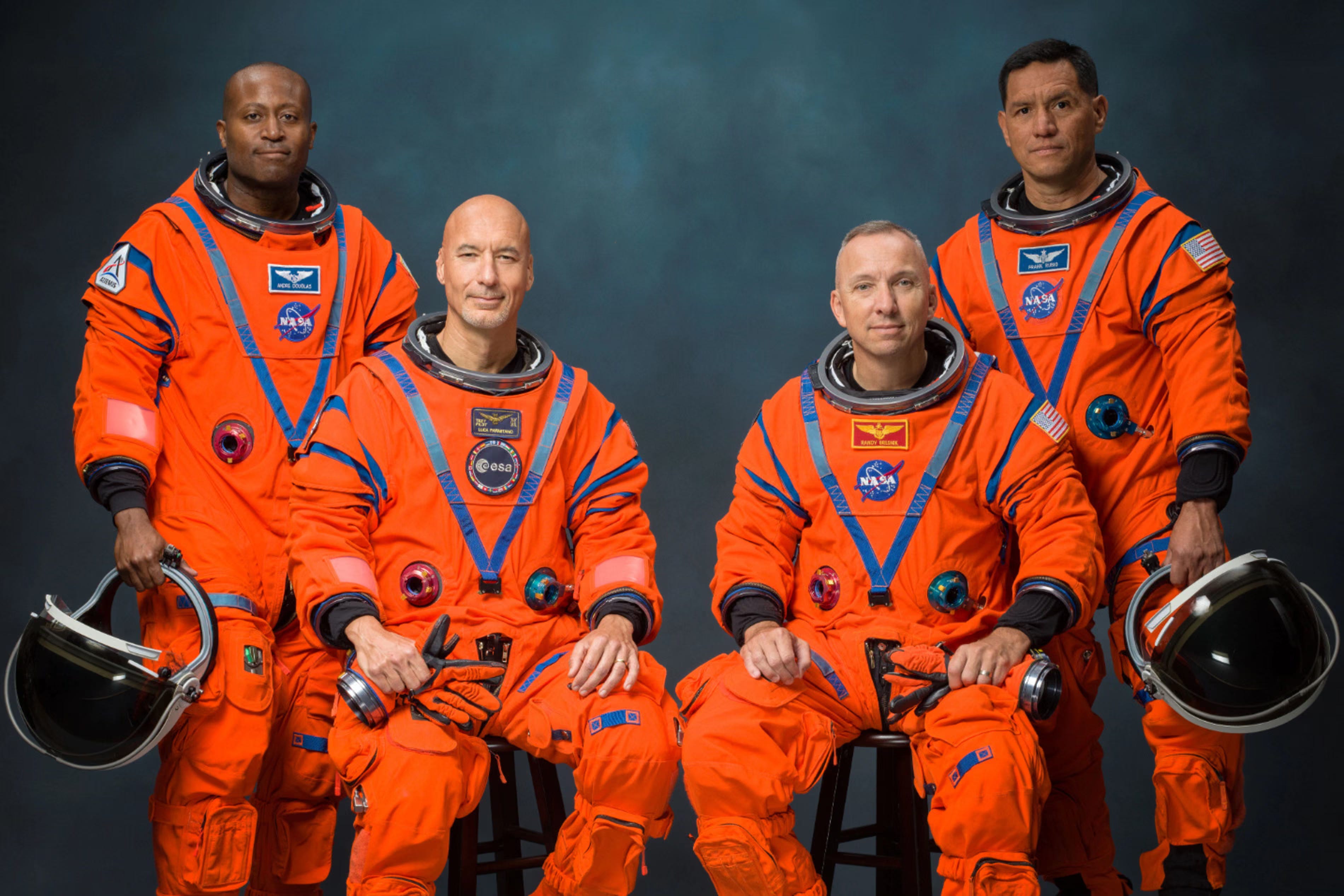
Don’t get me wrong. Each and every one of those four astronauts has merit, experience, skill, capability. But so do plenty of women astronauts.
Why does it matter? Because the Artemis programme was meant to be different from the Apollo programme of the 1960s. This time, going to the Moon was supposed to be for all humanity. The first woman and the first person of colour would go to the Moon, and it would be an international endeavour. NASA statements explicitly said that the US couldn’t do this on its own, that this time it would be in partnership with other nations, and in partnership with commercial players. Collective, collaborative, representative.
Canadian astronaut Jeremy Hansen said just before the Artemis II launch in April this year “we go for all humanity”.
But while that might have been the Canadian sentiment, since the MAGA president has been in power, that narrative has been removed from the NASA website, and from public statements. Now, it’s “America First”, with explicit policy statements about American superiority in space.
And just as any mention of gender, women, diversity, equity, inclusivity has been wiped from all public policy in the US, including across the military, so too has the promise to include women in this mission. It’s not all of humanity. It’s not for all humankind, it’s for all mankind.
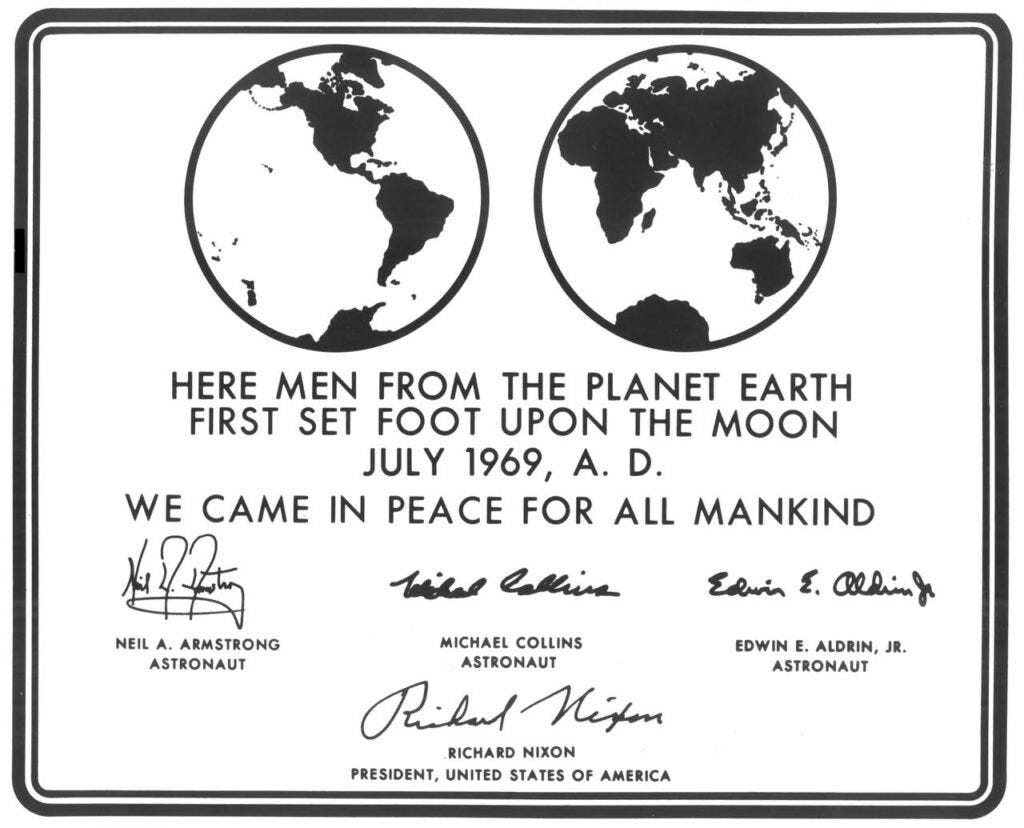
Men set foot upon the Moon for all mankind. Take that literally.
Why does it matter?
Without the equal participation of women, and of all nationalities in space activities, we cannot fulfill on the declaration of Article I of the Outer Space Treaty that space shall be the province of all, and “shall be free for exploration and use by all States without discrimination of any kind, on a basis of equality and in accordance with international law.”
Diversity matters. Not just for representation, but for actual participation, design, problem solving. Even how we frame the problems. If this is through the lens of a single culture, a single major power, a single gender, it’s a pretty limited lens. We can’t actually solve difficult problems by bringing singular thinking.
I’ve written about this before in a piece called “The Province of all [Hu]mankind”. The Outer Space Treaty says space is the “province of all mankind”. And for several decades it was, indeed, the province of mankind, to the exclusion of women. Sometimes men even fought publicly to keep women excluded.
In 1962, a clandestine “Women in Space” programme was bankrolled by the pioneering pilot Jackie Cochran.
In this program, a number of women were selected by Dr. Randolph Lovelace, a contractor to NASA who led the physical tests and training for astronauts, to undergo the exact same training as the men, because he suspected women would be better candidates for space travel, due to our generally lighter weights and lower need for oxygen. A higher percentage of women passed the tests than men, and many of the women performed better than the male trainee astronauts. However […] Lovelace’s motives may have been focused on the need for women as secretaries and assistants in future long-term space habitations.
When “Women in Space” candidate Jerrie Cobb testified before a congressional subcommittee in 1962, she stated “we seek, only, a place in our nation’s space future without discrimination”, but astronaut John Glenn testified that creating a programme to train women astronauts would compromise the race to land on the Moon before the Soviets. Moreover, he argued “the men go off and fight the wars and fly the airplanes and come back and help design and build and test them. The fact that women are not in this field is a fact of our social order.”
- “The Province of all [Hu]mankind,” by me, published as a chapter in M. de Zwart and S. Henderson (eds.), Commercial and Military Uses of Outer Space https://link.springer.com/chapter/10.1007/978-981-15-8924-9_12
Ironically, excluding women may have set the US behind in the race to the Moon, rather than compromising them. One year after this battle of the sexes in the U.S., in 1963 the first woman in space, Soviet cosmonaut Valentina Tereshkova, flew a solo three day mission.
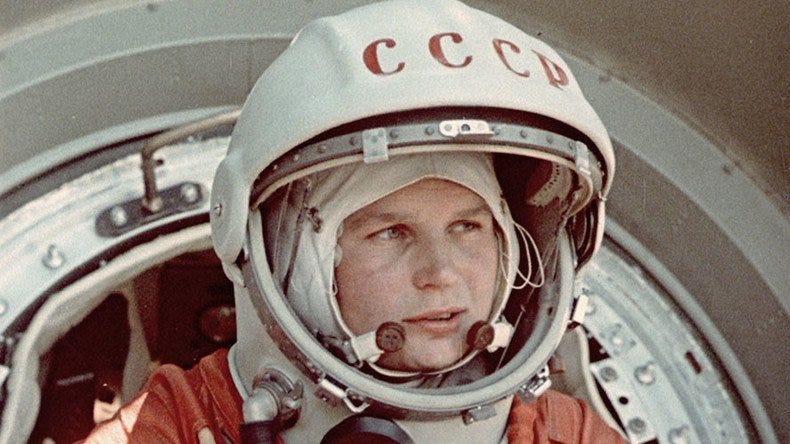
But she was not to be followed by another woman until 1982, when Svetlana Savitskaya flew on a mission to the Soviet Salyut Space Station. Sadly, she was greeted by her fellow cosmonauts with the gift of an apron, and they joked she she should get to work in the kitchen.
Despite this rude welcome, she went on to perform a series of highly skilled engineering tasks for which she had been trained, including testing a tool for welding in space, and becoming the first woman to undertake a spacewalk.
- “The Province of all [Hu]mankind”
Famously, when Sally Ride became the first American woman astronaut in 1983, an entire NASA engineering team spent precious time and money on designing a make-up kit for her, for inclusion among mission-critical objects (remember, every gram has to be taken into account, because more weight means more fuel is needed). They were surprised when she said she didn’t need any at all for her mission. They also proposed to her, just weeks before the launch date, 100 tampons for her 2 week mission in space.
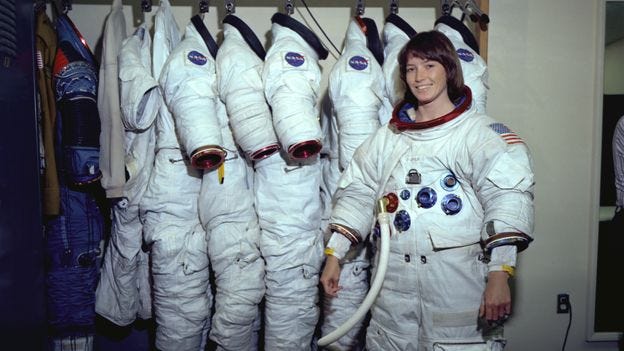
Just pause for a minute and take that in. Could this (clearly all male) engineering team not have asked any woman in their lives how many tampons are usually required when we menstruate? Could they not have consulted with the medical team or even (radical idea!) with Ms Ride herself as to whether she would be menstruating at all? Women astronauts typically take the pill and suppress their menstruation because it is apparently just too complicated to deal with female biology in micro gravity.
If reading about menstruation and tampons is a bit uncomfortable, bear with me one moment more. My point is, if these basic faulty engineering and design decisions are being made, while there are much more complex ones still unsolved, then Houston, we have a problem.
In March 2019, NASA planned and widely publicised the world’s first all-female spacewalk, which was to take place on international women’s day. But they had to cancel it at the last minute, as there was only one medium sized spacesuit available, the other was too large for the two women astronauts on the International Space Station.
If only a selection of the world’s population is included in design and decision-making processes, then stumbles like this cost time, money, human resources, and also credibility. Unless we have more diverse teams, diverse thinking, we have no chance of solving the wicked problems of space technologies, let alone space travel.
Who’s in, who’s out, and what’s the cost
On the other hand, if “humankind” is represented, rather than “mankind”, if the organising principle is inclusive and diverse to begin with, the entire range of solutions to all of these problems will be different. The same goes for solving for nearer term projects such as
engineering decisions for robotics and exploration;
governance decisions over our use of the natural resources in space, including the commercially valuable Low Earth and Geostationary orbits, the militarily valuable cis-lunar orbits (between the Earth and the Moon), and resources on the Moon;
the integration of environmental principles into our expanded use of space for terrestrial benefits;
and ensuring intergenerational distributive justice in the sense promised by the Outer Space Treaty.
That might all sound lofty and aspirational, but isn’t that exactly what we need if we are talking about human spaceflight? Isn’t it what we need if we’re talking about who gets access to space, who gets to benefit from space?
Indeed, if it’s an elite few who are included, only an elite few will benefit. In this week of news headlines about SpaceX going public with an IPO, and being valued at an impossible $1.77 trillion , this is not the democratisation of space, it’s a monopolisation.
But more about that next week. I’m still on a rant about the Artemis III crew!
But there’s a European astronaut, so surely it’s international and inclusive??
Yes, the Artemis III crew includes an Italian astronaut, Luca Parmitano, from the European Space Agency (ESA). In fact, he is the crew’s pilot. So doesn’t this mean I should stop complaining about it being an exclusive America-First club?
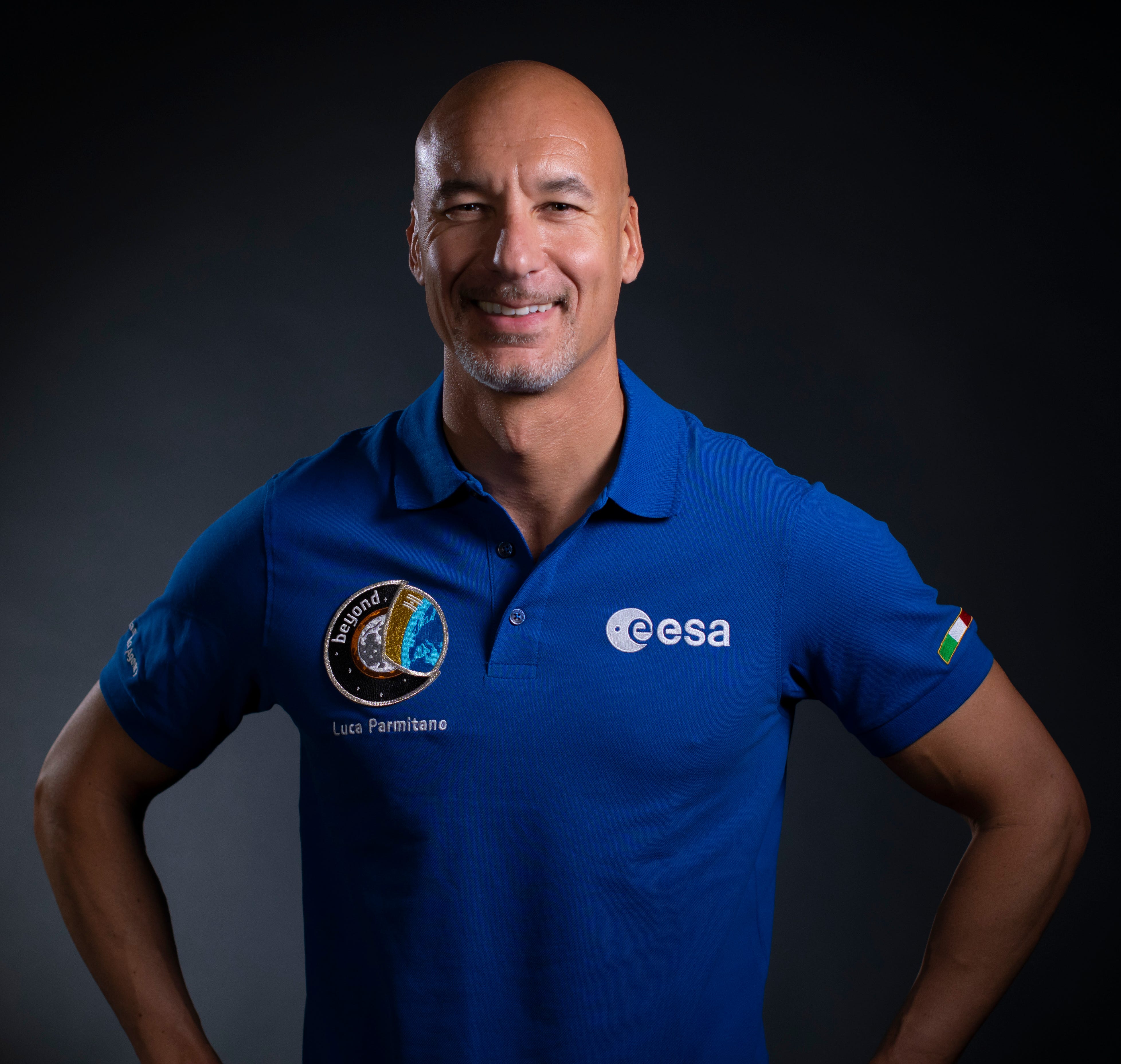
I’m going to hazard a guess, though I may be wrong, that Parmitano was included as a gesture towards the ESA, to try and heal the very broken trust with the US.
Astronaut seats are highly political. The candidates are selected based mostly on merit, but the final seats are decided based on politics and who pays what. This is very true for International Space Station crew, it is absolutely true for the American Artemis missions.
So what are the politics of this crew? Trust has been broken irreparably when it comes to US international relations generally. Secretary of State Pete Hegseth told Europeans during a D-Day memorial speech that they’ve allowed themselves to be invaded by migrants; VP Vance smashed transatlantic relations “to smithereens” when he addressed the Munich Security Conference; and NATO’s very existence is being called into question. On top of all of this, NASA has cancelled the Lunar Gateway project, which was supposed to be a lunar space station, a key piece of infrastructure for the Artemis programme, and which ESA (and the Canadians) have poured billions of dollars and years of R&D into as key partners.
ESA is pissed off. ESA is talking about how to go it alone, or in partnership with others (especially Canada), without the US. And maybe, just maybe, the US wants to repair that particular relationship a bit. Because as it turns out, even if the narrative is “America First”, the US may be realising that the original narrative of Artemis is the right one. It cannot do this alone.
To be clear, Artemis III is set to launch next year, and will not actually be a lunar mission. It’s a test mission, that will see these four astronauts spend about two weeks in Earth’s orbit, testing docking mechanisms for lunar landers with competing commercial companies (yup, SpaceX again, in competition with Blue Origin) and doing other tests that will feed into Artemis IV.
That fourth crew will be the one to land on the Moon. That’s the crew where we absolutely need to see at least one woman, one person of colour, and one or more astronauts from other nations. Otherwise we are facing a reiteration of the 20th century space race after all.
I am a man and I agree whole heartedly with what you have written in this article. For a number of years now I have been writing about space law and other space related issues in my blog. I mention this because the general thrust of the 250+ articles is what we do on Earth will not survive in space. This is true of law, governance, and especially human nature. I just posted a summary article to LinkedIn that shows this exact issue of pettiness, ignorance and the fragile egos of politicians and others who make the decisions. You can find that article here:
https://www.linkedin.com/pulse/written-human-summarized-ai-mars-moon-space-law-all-james-clulow-gscqe
I agree but what I'm hoping to do is launch a knowledge renaissance. I'm always amazed at what fascinates people and how difficult it is to get out something that's explaining mystery after mystery after mystery like gravity!
It's easy to fall in love with the latest shiny rock. We will look back and wonder why we missed the greatest event which was the Monk's knowledge Renaissance that is going to change absolutely every aspect of everything in our lives and make AI look insignificant by comparison. Explaining chemistry so that we can understand things like batteries or what's going on around us or empowering us to take on things like Climate Change is stupendous real progress, not a toy. AI is more like looking in the mirror while the monks balance of forces that gives us The Theory of Everything will actually cause a tsunami of progress that will transform us from a caterpillar into a butterfly