
Selling sunlight from space
One of the dumbest ideas ever just got licenced

One of the major regulators in the US is the Federal Communications Commission (FCC). A couple of weeks ago it approved a licence to a company that wants to use giant mirrors to reflect sunlight from space to Earth. This might be one of the dumbest space tech prototypes ever to be licenced, and one of the most disturbing, if we think about just how much leeway the US is willing to grant to new and novel technologies, without any apparent care for the environmental consequences on Earth and in space. This is an irresponsible regulator…surprise, surprise.
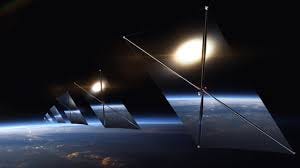
"We can basically sell the sunlight like it's a resource."
Reflect Orbital, “The Sunlight Company” markets itself as a company that’s going to:
- solve climate change
- provide access to 24-hour solar power
- allow farmers to grow more food per acre to feed more people
- light up streets at night
- assist search and rescue efforts
all by reflecting sunlight back to Earth from giant mirrors. As one of the co-founders put it, “we can basically sell the sunlight like it’s a resource.”
Their founding engineer, Robert Salazar, said he didn’t like the original marketing from the company, selling sunlight which is something everybody already has. Instead, he said:
"I think it is important now that they [the co-founders] really reframe what the real mission of this company is, and it's to provide very careful and wise stewardship over the energy demands of our planet in a way that no other technology can….
[but at the same time, orbital reflectors may be better suited to providing moonlight levels of illumination to parties and other events…]
“Maybe there’s some, you know, grand party in the desert. It could be anything. Somebody throws an event and they want their event lit from space. Reflect is not just a power company.”
- “Reflect Orbital wants to turn night into day with mirrors in space” by James Pertill, ABC News
If that sounds like a very vague mission statement, and one that still hangs on selling us something we literally all get for free, we should certainly pose giant question marks. What exactly is the problem this company is trying to solve? Who are its clients, and how much would they be willing to pay for access to sunlight outside of daylight hours?
The math doesn’t seem to add up. The prototype satellite will have a single 18m diameter mirror, that can be adjusted in terms of attitude to reflect the sun back down to Earth at any given moment. It won’t be able to provide light as strong as a full moon, let alone anywhere near as bright as the sun, and it’s really unclear how it would do anything at all related to climate change.
Reflect Orbital has said that they would charge $1,000 per hour of sunlight once they create a constellation of these satellites. As one astronomer, Dr Michael Brown at Monash University in Australia, has calculated:
“Reflect Orbital would need 3,000 satellites, each equipped with 54m-wide mirrors (ie several times larger than the pilot satellite’s), to achieve 20 per cent of the illumination of the midday sun.
In low-Earth orbit, satellites move very fast to resist the pull of gravity.
Each would be able to provide light to a given location for no more than 3.5 minutes.
So, that’s 3,000 satellites for 3.5 minutes of very weak sunlight.
Reflect Orbital has suggested it will charge $US1,000 an hour per satellite, Dr Brown said.
Beaming an hour of sunlight to any one location would require tens of thousands of satellites.”
- “Reflect Orbital wants to turn night into day with mirrors in space” by James Pertill, ABC News
This means you’d need to pay between $10 million and $20 million USD for one hour of very weak 20% of sunlight illumination. The most optimistic estimations suggest it would be a bit like twilight.
I can’t see this creates any business case whatsoever for farmers wanting to increase their crop yields, or for increasing terrestrial solar power, nor even for lighting up streets at night. 20% of sunlight at night is not going to assist much for search and rescue either, even for billionaires willing to pay that price tag. Even if we assume that the materials will get cheaper, and even if the cost of launch continues to reduce in price over time, this does not sound very convincing.
Might be a fun gimmick for a very wealthy person’s birthday party, but beyond that this is not a very compelling case.
More space junk, anyone?
Reflect Orbital was granted a license by the FCC to launch a prototype into Low Earth Orbit (LEO) later this year. From there, their plan would be to launch 1,000 of these by 2028 and 50,000 by 2035. Anyone tracking LEO congestion is going to hear very loud alarm bells ringing.
Currently, there are approximately 16,000 active satellites orbiting Earth. The vast majority of these are in LEO, which is anywhere from about 1,000 km to about 1,800km from Earth’s sea level. Most of this traffic is concentrated between 400 km and 1,000 km. That’s where the International Space Station orbits and it’s also the altitude of most of SpaceX’s Starlink satellites, which form the majority of all satellite traffic.
There’s also an estimated 130 million pieces of debris, everything from rocket bodies to bolts to collision debris down to about 1 mm in size. Of trackable debris - that is, pieces that are 10 cm or larger - there are at least 30,000 pieces, the vast majority of which are also in LEO.
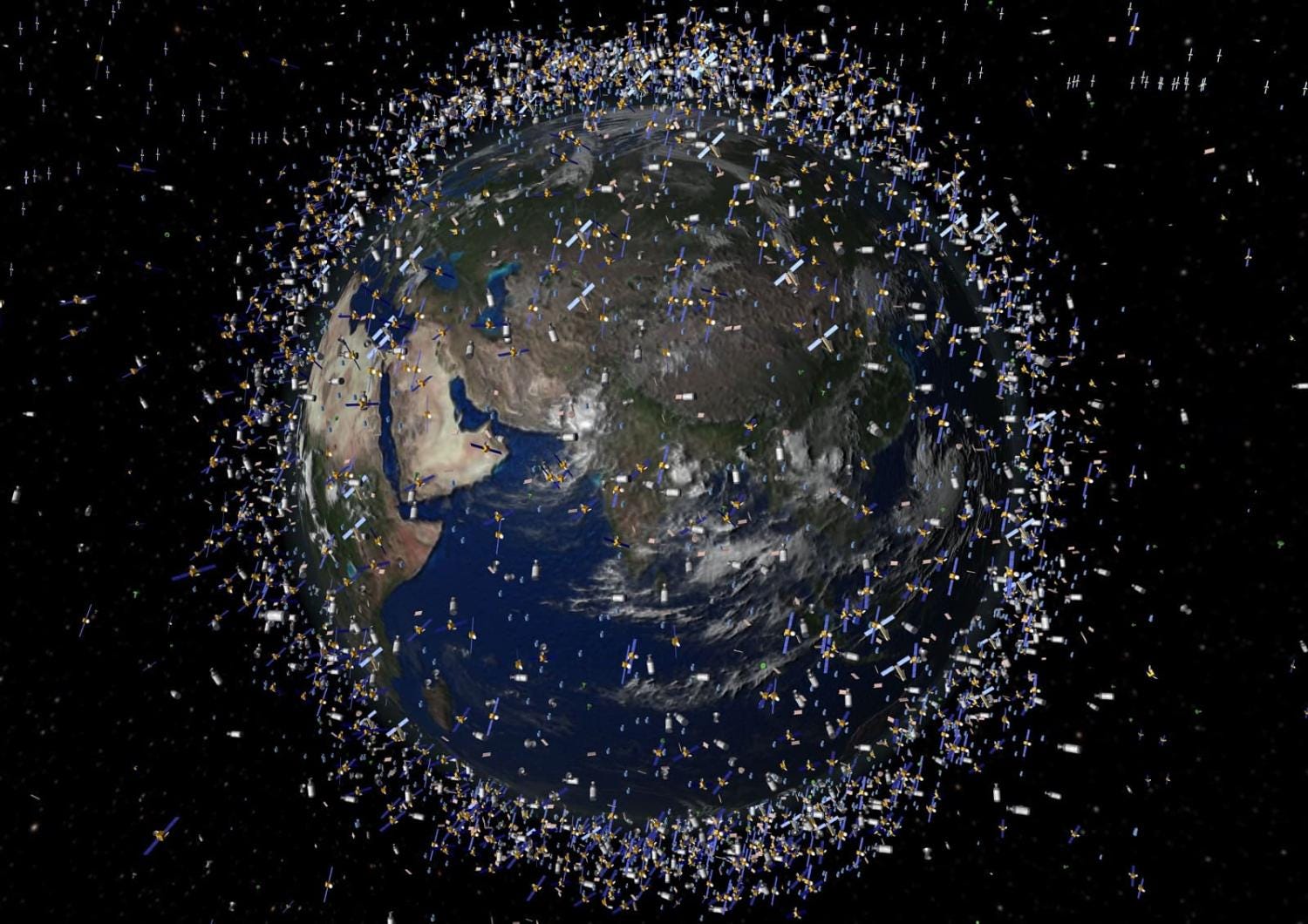
In LEO, satellites are moving at 7 km/second, or 10 times the speed of a bullet, and they orbit the Earth every 90 minutes. With today’s current traffic congestion in these orbits, there is a risk of collision hundreds of times per day.
Sometimes these are near misses. Sometimes they are evaded by collision-avoidance manoeuvres undertaken by operators, if they have sufficient information to predict trajectories and move satellites into slightly different trajectories in time to avoid collision with other satellites or with debris. But, as I’ve discussed in previous posts, there is no single source of truth for tracking space traffic, and as of yet, no effective global coordination.
If Reflect Orbital wants to add another 50,000 satellites in the next ten years to this traffic, all it does is add an incredible uptick in the daily risk of collisions with other satellites, many of which are providing critical services to the global population.
All to shine a bit of sunlight down on Earth when the sun does not shine.
Stop shining that in my face !
Before the FCC made its decision, there were hundreds of objections from astronomers and biologists.
Astronomers raised the same kinds of concerns they have been raising about mega constellations for many years. The increase in satellite traffic in LEO over the past few years, largely due to SpaceX and newcomer megaconstellations consisting of hundreds or thousands of satellites, is interfering with the ability to undertake accurate and uninterrupted observations of our solar system and the universe. Satellites bearing 18-meter or larger mirrors would be an existential threat to astronomy.
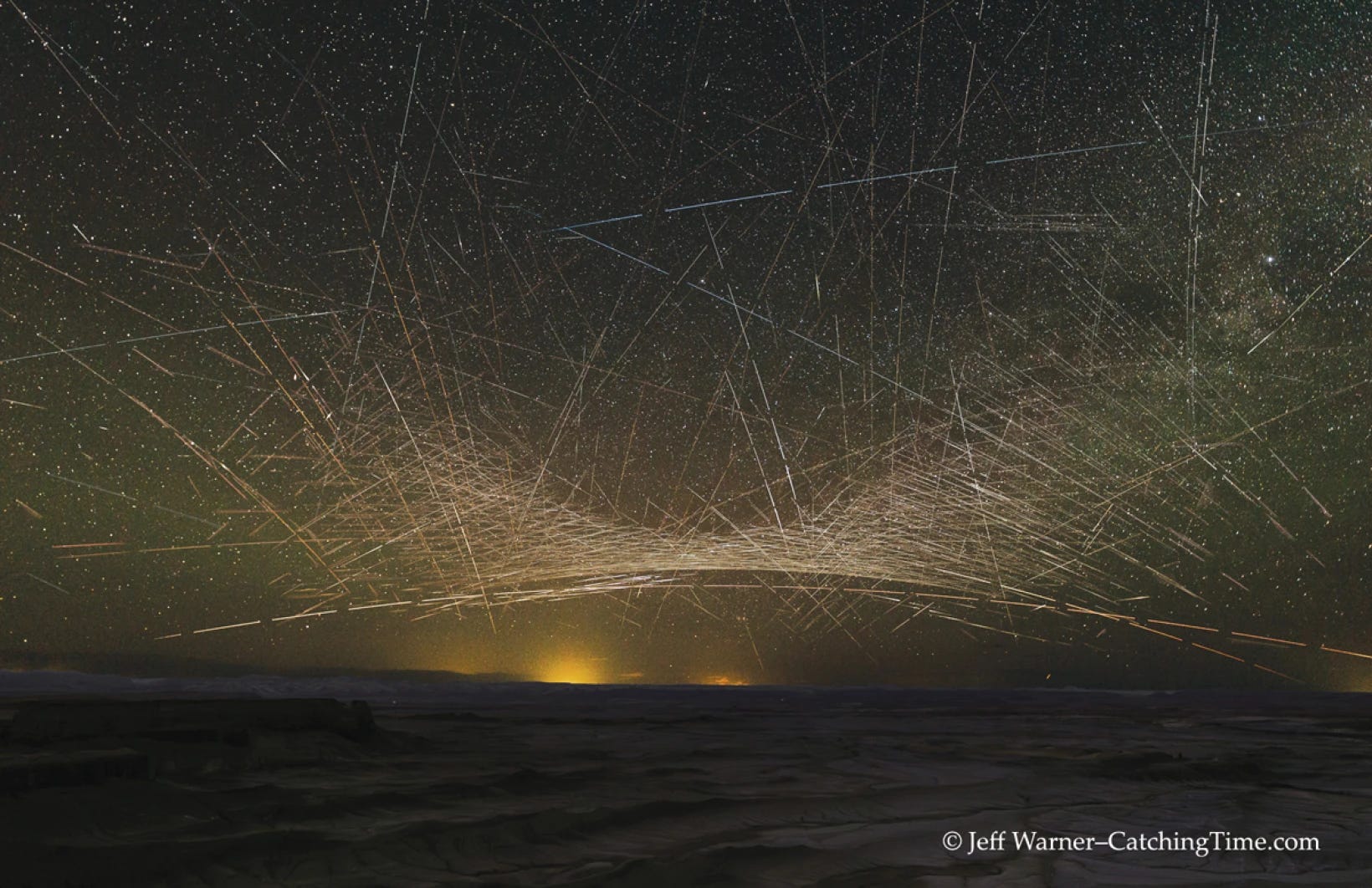
Reflect Orbital has said that they would not reflect sunlight back onto Earth if it were to interfere with dark and quiet skies. However it turns out that when astronomers started to engage with them and demonstrate locations around the world where astronomy telescopes are located, the company founders seemed surprised.
You also have to ask questions about the veracity of a business case if a company says it’s willing to switch off its very expensive services so that non-profit bearing science can take place.
Then there is the potential negative impact on natural biological rhythms from increasing sunlight hours or providing light at different times throughout the night.
Our own circadian rhythms are determined by light and dark, as we all know when we try to tell ourselves to stop looking at bright screens before going to bed. In their objections, experts raised a concern about the negative impact of confusing our systems with even more light from space.
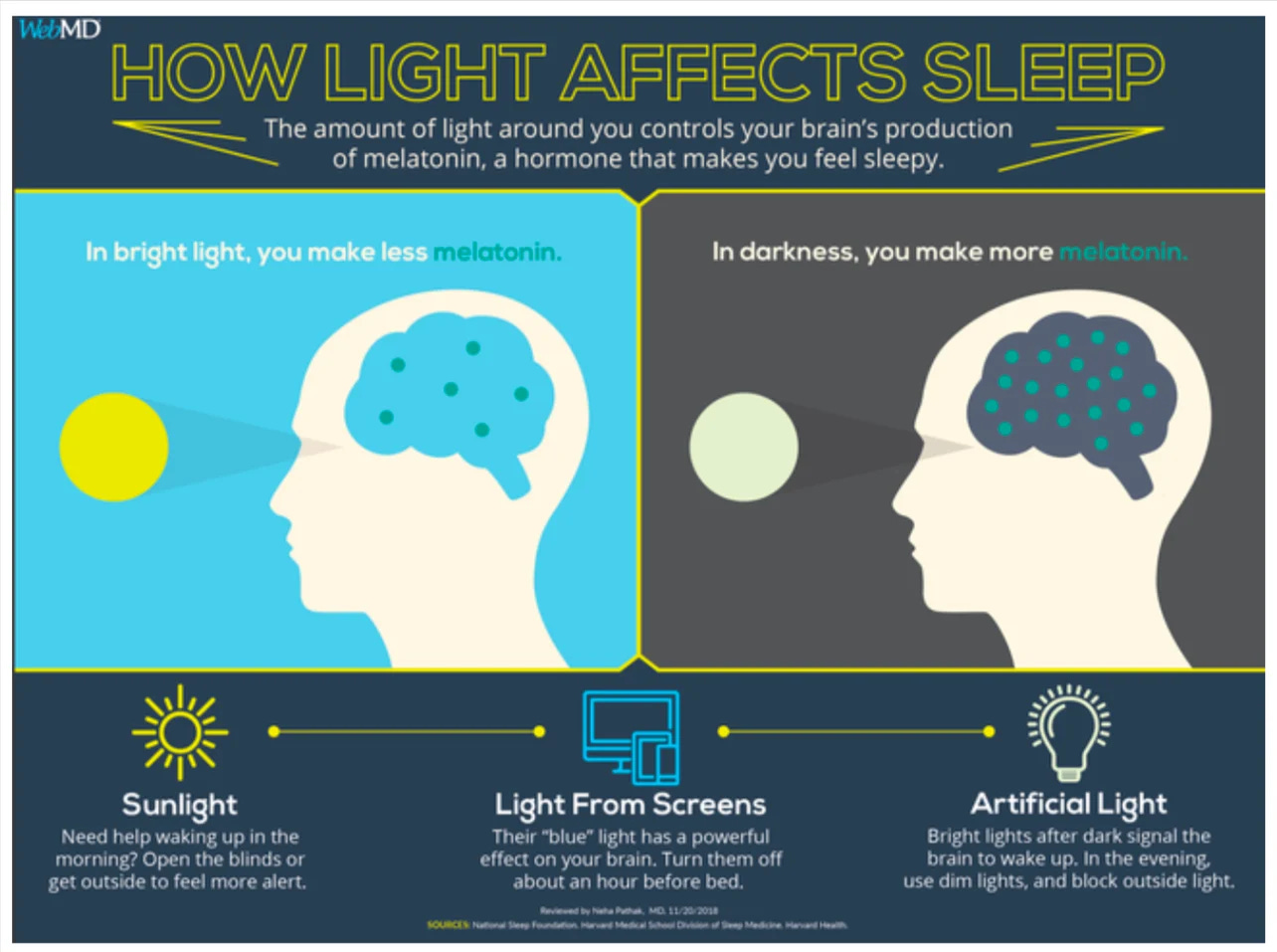
The same goes for fauna and flora around the world. Biologists have said that shining light, even as bright as the full moon, could interrupt migration patterns, mating seasons, and the health of wildlife, bird life, and marine life. It could even have a counterproductive effect on crops, rather than increasing their yields.
Reflect Orbital has suggested that if there were objections to a request for sunlight in a particular geographical location or area, they would not provide the service to the client requesting it. While it is heartening to think they would honour objections from anyone concerned about environmental impacts, or potentially even just privacy impacts (I don’t want to suffer bright light in the middle of the night just because my wealthy neighbour wants party lights from space!) …..this doesn’t seem like a very honest business case. Either you’ll honour every objection, in which case watch a lot of space citizens become very active, and your client base fall away! Or you won’t honour them if you want to sell your services.
So why did the FCC licence them?
While this is certainly a new and novel technology, and while regulators can be expected to support innovation by not being too restrictive, in this case it seems entirely frivolous and potentially damaging without having any realistic case.
Despite hundreds of very well-founded objections, the FCC simply said it was not within their ambit, since they are a communications regulator. They decided they didn’t need to consider or answer the objections, and they provided the license. This is the hallmark of an irresponsible regulator.
Even in the strictest reading, if environmental concerns do fall outside the ambit of the FCC, they still should not be providing a licence for activities that are likely to cause harm to the space activities of other nations. This is baked into Article IX of the Outer Space Treaty, which requires due regard for the space activities of other states, and also obliges the launching state to consult and notify other states of activities that may cause harm.
To be honest, I’m truly unclear why the FCC approved this. Some journalists have asked me if there might be financial incentives, like certain people high up being investors in the company. There’s no evidence of this, but it sure does raise questions.
The company has been able to raise $20 million in funding, but it also claims on its website to be “actively contracting with customers after receiving over 260,000 applications for satellite-reflected sunlight from 157 countries last fall.”
I find this highly questionable. The UN has 193 member States, and you’re telling me that 157 of them - over 81% of the world’s countries - are actively contracting with this little company that has yet to launch a prototype, requesting sunlight that’s weaker than twilight to be shone down on their territories???
Is this more “Lawless Wild West”?
You might wonder how one country can give a licence to a company to undertake an activity that would have physical effects globally. In this sense, it’s a little different from licencing a communications satellite, or a tv broadcast satellite, or even an Earth observation satellite.
For traditional satellite applications, a company has to have several licences and permits from the State where it operates, and the State from where it launches. That can sometimes be more than one State, but let’s keep it simple for now. A US satellite telecommunications company will be licenced by the FCC, and will then seek to provide its services not only within the US, but also in other countries. That’s where domestic regulations in other countries come in.
Some African and Pacific Island countries, for example, have essentially prohibited SpaceX’s Starlink in their territories, refusing to licence it and banning citizens from purchasing the service. This is sometimes because Starlink doesn’t comply with local majority-ownership laws, sometimes because of concerns about how politicised Elon Musk is, and his decisions to switch access on an off might be existential for a small country. So there is a choice about where the satellite services can be received if they are unwanted.
The flipside is that some countries like Iran and North Korea both have jammed satellites which were broadcasting tv content that criticised their respective political regimes. But at least we can say they are able to exercise control over satellite services in their sovereign territory!
Similarly, Earth observation companies have to comply with national security requirements, that they cannot gather data of sensitive or protected areas within the territory of another State.
With Orbital Reflect, it might be harder to regulate whether or not the company shines unwanted sunlight into sovereign territory, since it isn’t a traditional satellite service that uses radio frequency or transmits information. It just wants to shine a lotta light. How can that be regulated if it is unwanted?
To me, this is precisely where space citizenship comes in. Countries certainly have environmental protection regulations that apply within their territories, and citizens can demand these be applied to protect against negative impacts on flora and fauna, prohibiting this “service” from being offered within their territory.
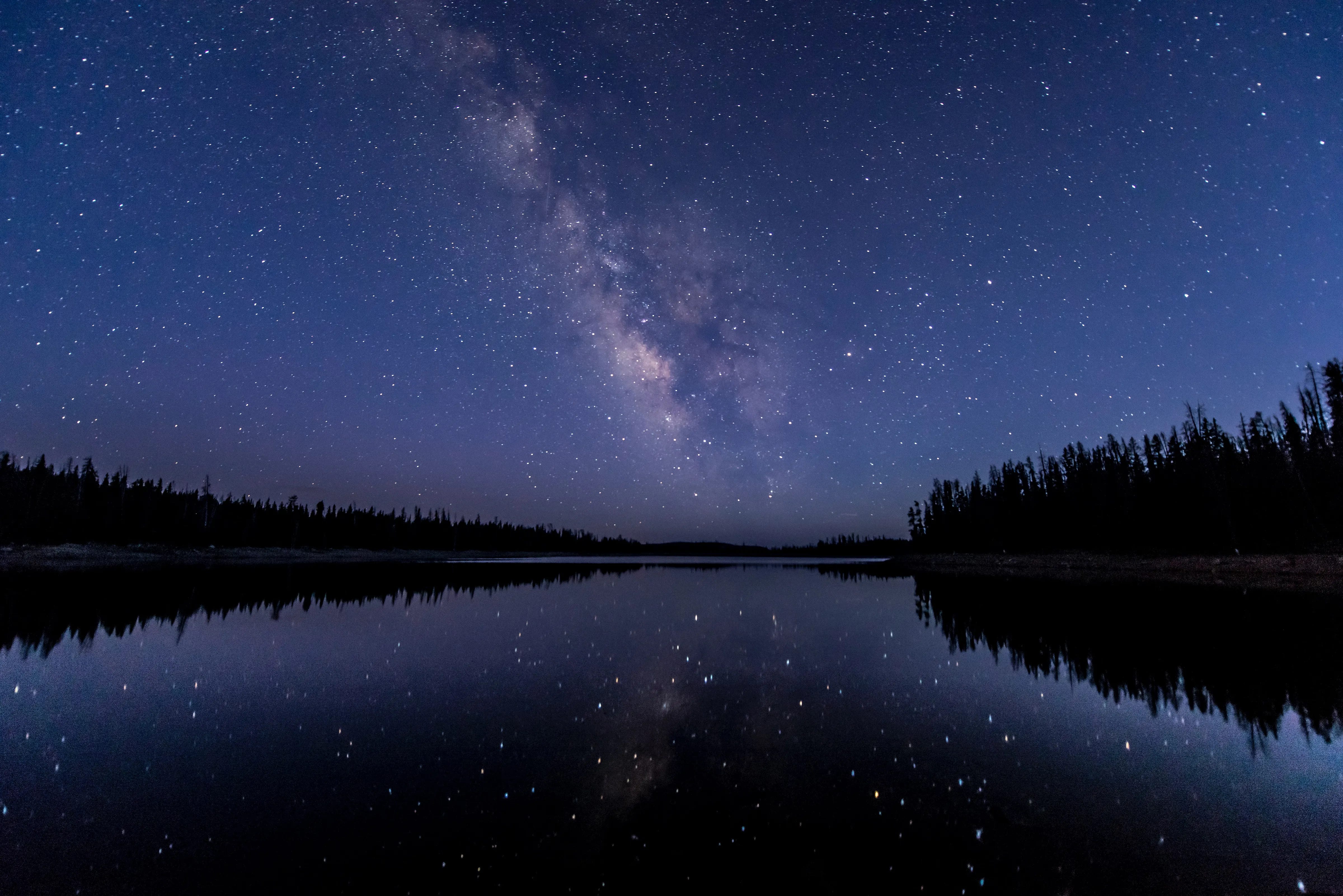
Astronomers around the world are already very actively advocating for protection of dark and quiet skies against the impacts of increased space traffic. It’s a pretty easy case to make when it’s mirrors deliberately shining light at night, and adding more voices to astronomers’ work is an easy thing to do.
And then there are the impacts on cultural heritage, described by some Indigenous communities as “sky country”. For millenia, Indigenous peoples have used the stars for navigation, climate science, agriculture and environmental management. Adding voices to Indigenous advocacy that seeks to reduce the impact of space activities on sky country, and to increase sustainable policies, is also a low hanging fruit.
Luckily, it may not take much advocacy, since the technology doesn’t speak at all for itself. We may just see the money fall away from this entire hair brained scheme. It would make a lot more sense economically and in energy terms just to build a few more solar farms around the world.